AI & Design Thinking
Using AI to Make Better Design Decisions
The Room Where Decisions Go Wrong
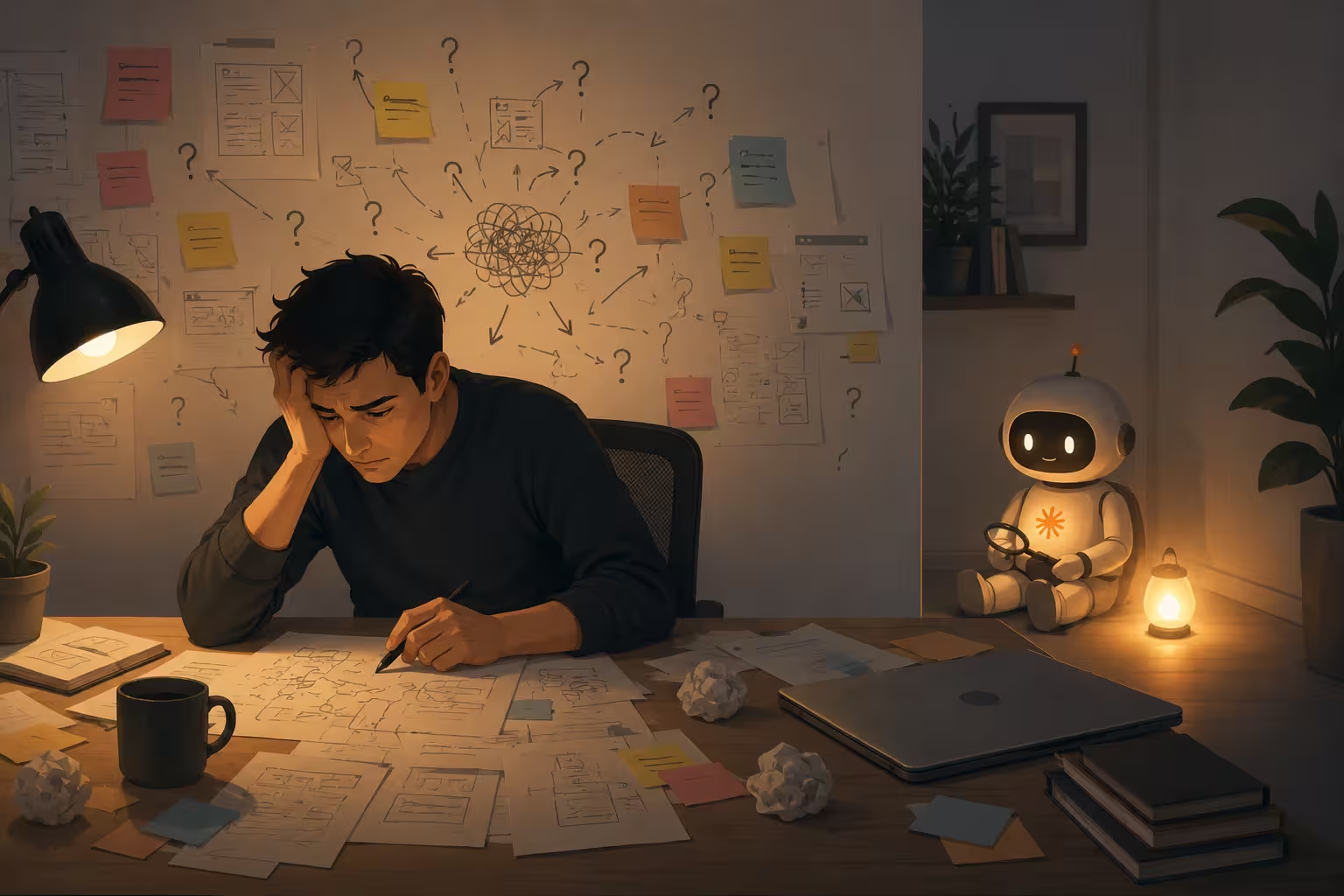
Picture a product team six weeks into a debate about whether to redesign the onboarding flow. Leadership wants data. Design wants empathy. Engineering wants a decision. Everyone is waiting on everyone else — and the user is still stuck on screen three.
This isn't a rare situation. It's the default state of most product teams. Decisions get made slowly, often by the highest-paid person in the room — not the most informed one. And when they land wrong, the cost doesn't show up in a single line item. It shows up in re-work, delayed launches, and features no one uses.
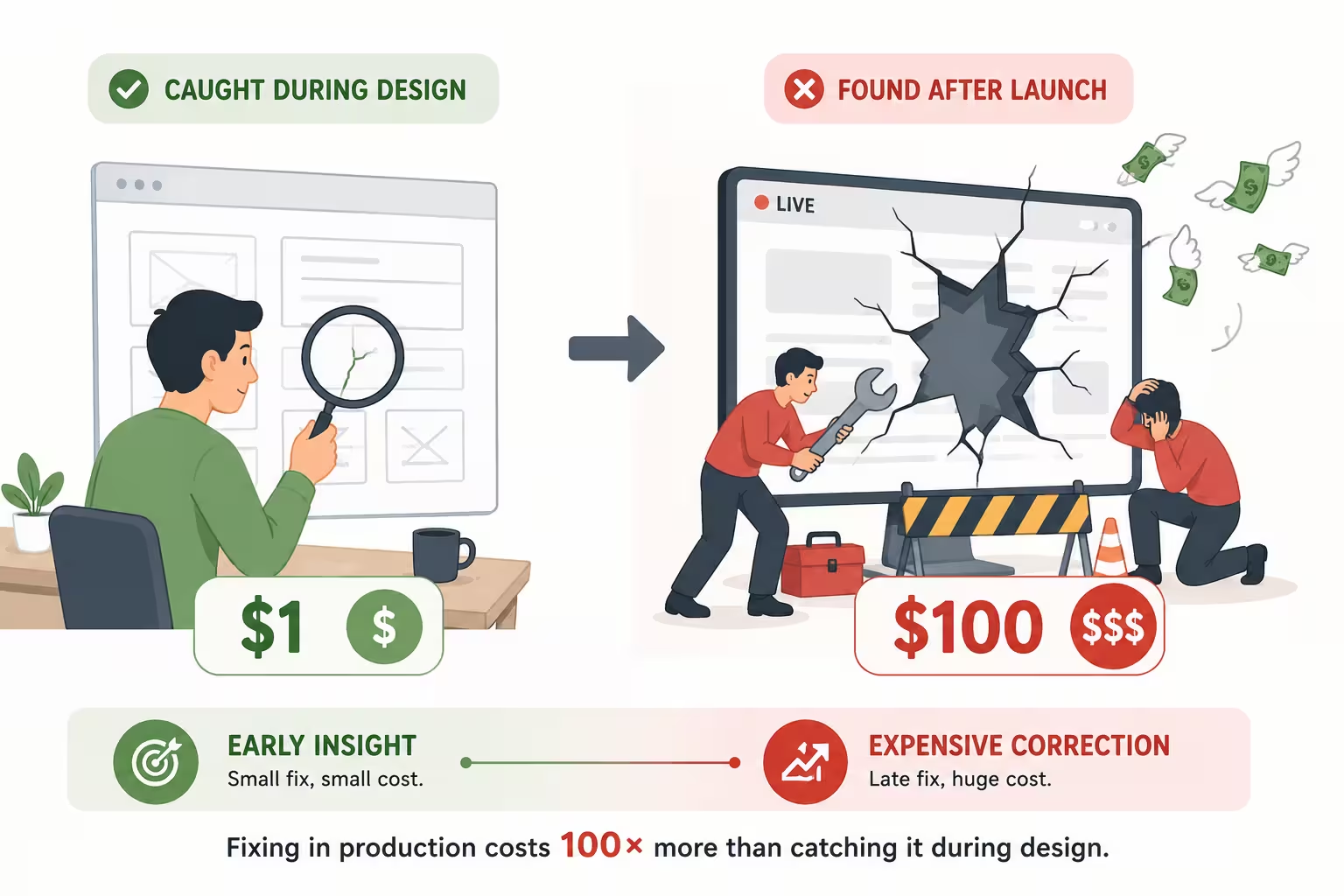
Fixing a problem in production costs 100× more than catching it during design. That's not a design argument — that's a budget one. The earlier a decision is grounded in real insight, the cheaper the course correction.
The Shift: Ask What You Need to Know Before You Decide
The turning point for any product team comes when they stop asking "what should we build?" and start asking "what do we need to know before we decide?"
That reframe turns discovery from a checkbox into the most valuable hour in the sprint. Instead of designing a feature, the team is designing clarity — and clarity is what makes every downstream decision faster and cheaper.

This is where AI enters — not as the decision-maker, but as the accelerant. AI compresses the distance between raw information and actionable insight.
Before research, it surfaces patterns in existing data and sharpens hypotheses so interviews stay focused. After research, it clusters qualitative findings and translates user language into problem statements the whole team can act on — in hours, not days.
IMAGE PLACEHOLDER: AI + design process flowWhat Changes When It Works
When AI is paired with design thinking — not used as a shortcut around it — the product conversation changes tone entirely. Debates shorten. Scope tightens. Launches feel less like bets and more like informed moves.

Features that don't connect to a real user problem get cut before they reach engineering. Stakeholder alignment — which used to take three meetings — happens in one readout, because the evidence is already in the room.
UX research stops being a "nice to have." It becomes the lens through which every product question gets answered — and AI makes that lens significantly faster to focus.
The Real Cost Saving
The ROI of AI-assisted design is usually invisible until someone does the math. A mid-size product team spending 30% of each sprint in direction debates isn't facing a culture problem — it's facing a clarity problem. And clarity has a price.

| Activity | Without AI | With AI + Design |
|---|---|---|
| Synthesize 10 research sessions | 2–3 days | 2–3 hours |
| Build a hypothesis map | Half a sprint | 1 focused workshop |
| Align stakeholders on direction | 3+ meetings | 1 readout with evidence |
| Prioritize features | Opinion-based debate | Evidence-based decision |

The Point
AI is often sold as a replacement for thinking. In design, that framing is backwards.
The value isn't that AI does the work — it's that AI removes the friction between insight and decision. Less time synthesizing means more time questioning, reframing, and making the calls that actually move a product forward.
Wrong decisions, made slowly, are the most expensive thing a product team can do. Pairing AI with design cuts both — the wrong and the slowly — at the same time.